
Alright, let’s get real for a moment. I have never once even thought about anti-aging skincare until I was staring into an unforgiving bathroom light and realized I now had a small line around my eye that I hadn’t noticed the year prior. Here come the late night Google searches for “best anti-aging serum.”
If you’re in the same boat right now — welcome! This guide is far from another listicle throwing ten different products at you with zero context behind. I want to help you understand what an anti-aging serum does, what features you should pay attention to being a beginner, and which product I would personally recommend to a friend after a lot of research and experience on my own skin.
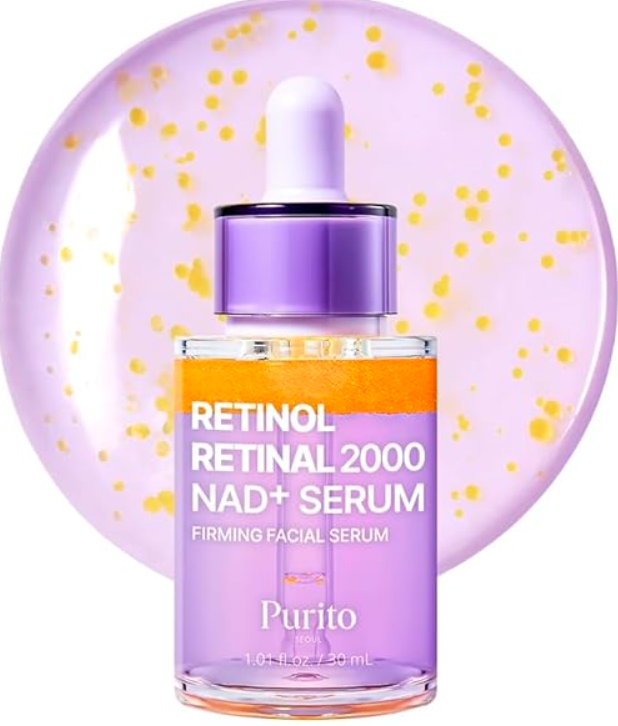
Short answer: if you’re looking for an ingredient that has been proven scientifically to have an effect, pick retinol or its faster acting cousin, retinal. If you’re a beginner, look for low concentration, barrier-protecting formulation, and a serum that doesn’t ask you to just figure out the rest. The one I’ve tried and the one I’ve been using and would genuinely recommend to a friend is the PURITO Retinol 0.1% + Retinal 0.1% Anti-Aging Facial Serum — more on why a little further down.
Why Most Beginners Get This Wrong
What most people who start out using active ingredients do not know is that more is not better. Women tend to use high concentrations of retinol thinking that this will work better and they will achieve faster results, but usually they experience redness, flaking skin, and other adverse reactions during the first week and become discouraged to continue.
In reality, it takes patience and gradual usage for the desired effects to take place. The process is about increasing your skin cell turnover rate due to retinoids being applied on the skin, which is a great way to reduce fine lines, wrinkles and improve skin firmness. However, the process needs some time – going too harshly into the treatment will make you give up after the first negative effect.
So the goal for a beginner isn’t “strongest formula.” It’s “something my skin can actually tolerate consistently, for long enough to work.”
What to Actually Look For in an Anti-Aging Serum
Before you buy anything, it helps to know what you’re reading on the label.
- Retinol VS Retinal: Retinal (“retinaldehyde”) is transformed to an active form of vitamin A in the skin faster and can be more aggressive for the skin. However, there are products now that contain retinol and retinal together at the same time but in small amounts.
- Low starting percentage: Starting percentage of 0.01%-0.1% is perfect for beginners. You can always switch to the stronger formula later.
- Barrier-support ingredients: Things like niacinamide, panthenol, ceramides, or NAD+ help offset the dryness and sensitivity that retinoids can cause, especially in the first few weeks.
- Lightweight, non-greasy texture: A serum that absorbs quickly and layers well under moisturizer is much easier to stick with long-term than a heavy, sticky one.
- PM-only formulas: Most retinoids break down in sunlight and increase sun sensitivity, so a PM (night time) serum paired with daytime SPF is the standard, expected routine.
My Pick: PURITO Retinol 0.1% + Retinal 0.1% Anti-Aging Facial Serum
After comparing a bunch of beginner-friendly options, this is the one that checked every box for me, and it’s the one I’ve actually kept in my nighttime rotation.
The PURITO Retinol 0.1% + Retinal 0.1% Anti-Aging Facial Serum is a dual-retinoid formula, meaning it uses both 0.1% retinol and 0.1% retinal together, rather than relying on one or the other. The idea is that retinol handles the slower, long-term skin renewal while retinal works faster on texture and fine lines, so you get a more rounded result instead of waiting on one ingredient to do everything.
What stood out to me as a beginner specifically:
- It’s formulated with NAD+, which is used in order to help maintain the skin barrier when your skin is adapting to the effects of retinoids, essentially easing the “retinization” process that many new users find intimidating.
- The texture is watery and lightweight, not the heavy and greasy retinol cream that many users would expect. The product absorbs easily and leaves no residue, making its regular daily application more convenient.
- It’s a shake-to-activate, bi-phase formula, meaning that the bottle contains capsules which have to be shaken in order to activate the product. It might seem a bit gimmicky at first but it’s only their way of stabilizing the retinal until the usage..
- The brand’s own guidance is beginner-conscious: starting at 2–3 nights a week and working up, rather than pushing nightly use right away.
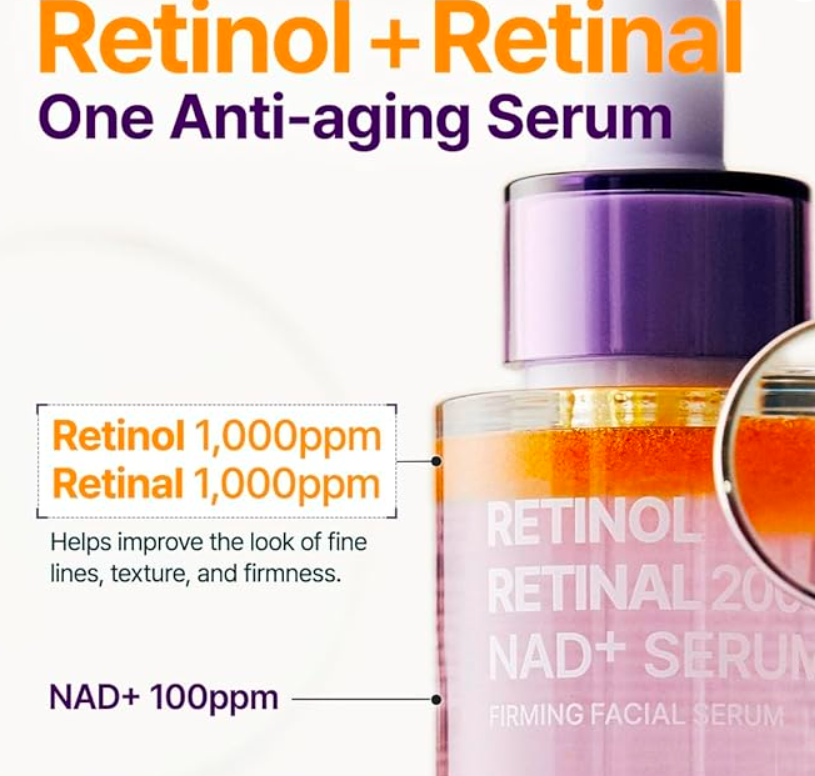
As for the effect reported by most users after using the product consistently for a couple of weeks – softer texture, firmer skin and slightly softened fine lines. However, it’s important to understand that it will take two weeks to get rid of wrinkles, and no serum will do that. Skin rejuvenation happens in deeper skin layers and will take 8-12 weeks in order to see the results.
👉 Check current price and availability on Amazon
How to Actually Use It (Without Wrecking Your Skin)
If you’re new to retinoids, here’s the routine that tends to work well:
- Cleanse first. Choose a cleanser that does not irritate the skin but leaves it clean..
- Apply to dry skin. Give a couple of minutes between cleansing and applying retinoids to wait until your face is completely dry, since applying retinoids to moist skin leads to additional irritation.
- Shake the bottle, then use 1–2 drops. Remember that just a few drops would do the job!
- Start slow. Begin applying the product two or three times per week during the first few weeks; slowly but steadily increase the frequency until the use becomes daily.
- Always moisturize after.Apply a base, fragrance-free moisturizer to lock the serum into the skin and to minimize dryness that often happens due to the process of retinization
- Never skip SPF the next morning. Remember to apply a good amount of sunscreen on the next day. It is an indispensable step when using retinoids because the skin will become more sensitive to the sunlight.
Here is one tip which is highly recommended by many estheticians when dealing with sensitive skin: “sandwich method”. Firstly, apply a thin layer of moisturizer, next – the retinoid serum and finally – the second layer of moisturizer.
What to Pair It With (and What to Avoid)
Good pairings: niacinamide, hyaluronic acid, peptides, and ceramides all play nicely with retinoids and can help support your skin barrier through the adjustment period.
What to avoid layering at the same time: strong exfoliating acids (like AHAs/BHAs) or benzoyl peroxide on the same night as your retinoid. Combining actives like this is one of the fastest ways to end up irritated, and it’s a really common beginner mistake. If you use other actives, consider alternating nights rather than stacking everything at once.
Realistic Expectations: What This Serum Can (and Can’t) Do
I think the skincare industry oversells the “overnight transformation” idea, so I want to set this straight. A consistent retinoid routine can realistically help with:
- Smoother feeling skin texture
- A firmer, slightly more “bouncy” look to the skin
- Softer appearance of fine lines over time
- More even-looking skin overall
What it won’t do is erase deep wrinkles, replace sunscreen, or work in a week. Anti-aging skincare is a long game, not a quick fix — and honestly, once you accept that, it gets a lot less stressful and a lot more sustainable.
FAQ
Is it suitable for people who are new to retinol? Yes, since it contains 0.1% retinol and 0.1% retinal, which makes it a relatively milder formulation. The company also suggests that one can start slowly and not apply it every single night.
Is it safe to use if I have sensitive skin? Maybe, but it is important to introduce it into the routine gradually (starting from 1-2 times a week) and doing a patch test beforehand if your skin is especially reactive or damaged. Consulting a dermatologist may be useful.
Is it meant to be used during the day or in the evening? It is a night product only like other retinoid formulations.
When can I expect the results? Usually, people experience some visible changes within 2 weeks of regular application; however, after 8-12 weeks, the effects become more obvious.
What should I avoid combining it with? One should not use it with other acids and benzoyl peroxide.
Final Thoughts
Starting anti-aging skincare doesn’t have to mean buying five products and overhauling your entire routine overnight. Honestly, the most effective approach is the boring one: one well-formulated retinoid serum, used consistently, paired with sunscreen during the day. That’s it.
If you’re looking for a beginner-friendly place to start, the PURITO Retinol 0.1% + Retinal 0.1% Anti-Aging Facial Serum is the one I’d point a friend toward — it’s gentle enough to ease into, but formulated seriously enough that it’s not just a “starter” product you’ll outgrow in a month.
As an Amazon Associate, I earn from purchases. This means if you buy through one of the links above, I may earn a small amount of money at no extra cost to you — it’s how I keep this site running. I only recommend products which have the best reviews or results